|

Neurogenic, Memory and Aging

Neurogenic and motor
speech disorders cover a wide variety of disorders that impact one’s
speech and language. Most common are:
NEUROGENIC DISORDERS
WHAT IS APHASIA AND WHAT CAUSES IT?
Aphasia is an acquired language disorder that is
caused by damage to the language centers of the brain. Various types of
aphasia exist and the damage can be caused by numerous factors. Injury
to the language centers of the brain is most commonly caused by stroke,
but can also be caused by blows to the head, gunshot/knife wounds, brain
tumor, and other sources of traumatic brain injury. Most people,
especially those who are right-hand dominant (right-handed), will
acquire aphasia if they receive brain injury to the left side of the
brain. However, for some people, the right side of the brain houses the
language centers; therefore, right side damage may also result in
aphasia. Individuals who have acquired aphasia may have been able to
read, write, speak, and listen very effectively before injury to their
brain, and are now limited in their ability to do so.
CLICK FOR
POWER POINT
-make a combined handout from communication diagram and brain
diagram
WHAT ARE SYMPTOMS TO LOOK FOR?
Patients with aphasia may have a variety of
symptoms depending on the location of the injury within the language
centers of the brain. A patient may have difficulty expressing
themselves through speaking and/or writing, yet they may appear to
understand all that is happening around them. They may experience
apparent muscle weakness or muscle incoordination, which makes their
speech and written language unintelligible. This can be highly
frustrating for the aphasic and the person with whom he/she seeks to
communicate. Another symptoms may be difficulty understanding spoken
and/or written language. The person with aphasia may be able to speak
fluently, yet cannot comprehend what is said to them or what they read.
The difficulties with communication may also appear in inappropriate use
of words (the person speaks fluently but their words do not make sense),
word-finding difficulties, repetition of the same word/words without
meaning, omitting words during speech, and misinterpreting
absurdities/idioms/humor. Symptoms as well as severity are highly
variable in patients with aphasia, therefore therapy and communication
strategies should be highly individualized.
WHAT IS THE ROLE OF THE SPEECH LANGUAGE
PATHOLOGIST (SLP)?
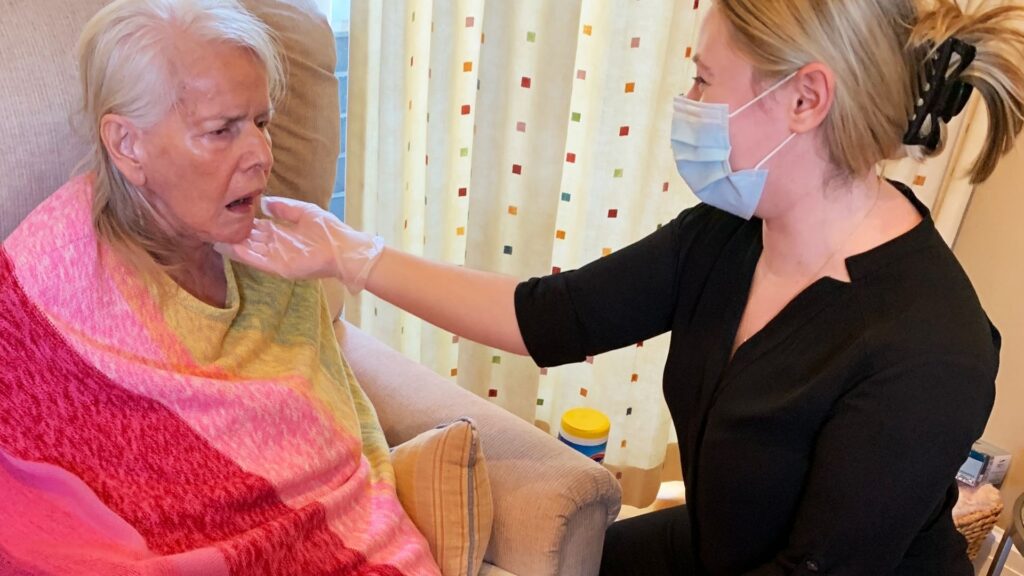
The speech language pathologist (SLP) will assess
each area of communication that the individual was able to use prior to
the injury and will determine the strengths and weaknesses of his/her
communication. For example, the SLP should evaluate his/her ability to
speak, write, read, and listen, determine where the communication breaks
down and help provide repair strategies through therapy. If the patient
is able to read well but has a difficult time speaking intelligibly, the
clinician can use the strength of reading to help the patient and family
develop strategies for repairing communication breakdowns within the
home. During speech and language therapy, the SLP may perform drills
and exercises with the patient to strengthen specific language skills
affected by the brain injury, teach ways to use strengths in
communication to compensate for weaker language skills, teach vocational
and daily functional activities to move the person back towards
independence as needed, and teach the spouse/family to help patient use
communication strategies learned in therapy at home/care facility.
WHAT SHOULD THE SPOUSE/FAMILY DO TO HELP?
Aphasia is often highly frustrating for the person
as well as the family and friends around the person. It is important
for the family to recognize that this person with aphasia no longer
communicates as they did before the injury. The family should learn how
they can facilitate/aid communication by writing, providing choices,
speaking slowly, and above all, being patient. Educate those around the
person about his/her communication problems and teach them how to
communicate with him/her more effectively. Recognize that this person
still needs to relate his/her wants and needs and still desires to
communicate.
MOTOR SPEECH DISORDERS
WHAT ARE MOTOR
SPEECH DISORDERS?
Motor speech
disorders are usually caused by stroke or trauma to the brain that
results in impaired ability to produce speech because of damage to the
areas that control muscles used for speech. There are 2 major types of
motor speech disorders: dysarthria and apraxia.
Dysarthria is impaired muscle control resulting in impaired speech
production (muscle weakness or paralysis). Many types of dysarthria
exist. Apraxia is impaired ability to smoothly coordinate the muscle
movements for speech (muscle coordination impairment).
WHAT ARE
SYMPTOMS TO LOOK FOR?
Symptoms that may be
present with dysarthria include weak muscle movements and imprecise
articulation of speech. Articulation (movement of lips, tongue, and
soft palate for speech), phonation (ability to produce sounds), and
respiration (breathing) may be affected.
Symptoms that may be
present with apraxia include the ability to speak spontaneously at times
but an inability to speak on command (when asked a question, etc.). The
brain sends a message to the muscle to move to produce speech; but, due
to damage, the muscle does not receive the command. Those with apraxia
can often produce individual sounds but cannot sequence sounds to create
words.
WHAT IS THE
ROLE OF THE SPEECH LANGUAGE PATHOLOGIST?
Following a stroke or
trauma to the brain, the Speech Language Pathologist (SLP) will evaluate
the patient’s breath support/respiration, phonation, articulation, and
voice quality to determine areas of weakness resulting from the
accident. The evaluation will provide the SLP with information needed
to determine the exact type of disorder and the most appropriate
therapy. He/she will usually include a combination of the following
activities in therapy: work to strengthen the muscles used for speech,
work directly practicing speech movement, teach compensatory or
alternative means to communicative, and educate and counsel the patient
and family regarding the disorder and ways to facilitate/help the
patient communicate. The SLP will work with the patient and family to
make communication as functional as possible. Treatment for apraxia and
dysarthria requires a determination of the level of severity of the
disorder, which will guide the goals for therapy. For the most severe
cases, the SLP will focus on the production of single, useful words;
while milder cases may have production of sentences and conversation as
the end goal. The SLP will determine the most appropriate goals for
each individual and family.
WHAT SHOULD THE
SPOUSE/FAMILY DO TO HELP?
Dysarthria and
apraxia affect much more than the person with brain injury. The spouse,
family, and all those with whom he/she communicates are also affected.
It is imperative that these communication partners be responsible to
learn how to facilitate (help) communication with the patient according
to his/her needs. Be supportive, educate others regarding the disorder,
and engage the patient in communication tasks as much as possible.
Attend therapy when possible and ask questions regarding anything that
may be unclear. Seek counseling if needed to help you and your loved
one deal with the life changes that have occurred.
< CLICK
TO RETURN TO SERVICES |